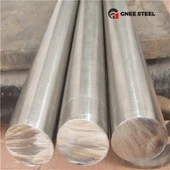
Q295NH and Q355NH are two commonly specified Chinese-designation high-strength structural steels used across pressure-vessel, bridge, and heavy fabrication industries.
The principal practical distinction is the targeted strength level: Q355NH is specified to a higher minimum yield strength than Q295NH. Because the two grades share similar metallurgical philosophies (low carbon, microalloying and controlled processing), they are often compared when designers seek to optimize weight, safety margins, or fabrication productivity.
GB (People's Republic of China national standards): Q295NH, Q355NH appear under GB/T designations for normalized and heat-treated structural steels, or pressure-vessel steels depending on the exact standard edition.
EN (European): comparable structural steels are in the S-series (e.g., S275, S355) though direct equivalence must be validated by mechanical and chemical data.
ASTM/ASME: analogous grades (by strength) include ASTM A572 for structural shapes; direct substitution requires property matching and approval.
JIS: Japanese standards have their own designations requiring conversion tables and property checks.
Classification: Both Q295NH and Q355NH are low-alloy, high-strength structural steels (HSLA category in broad terms). They are not stainless or tool steels.
The two grades are formulated as low-carbon, microalloyed steels. They typically contain carbon, manganese, and silicon as the primary elements, with controlled phosphorus and sulfur, and small additions of microalloying elements (Nb, V, Ti) to refine grain and increase strength via precipitation strengthening or grain refinement.
| Q295NH (typical role) | Q355NH (typical role) | |
|---|---|---|
| Low - balance of strength and weldability | Low to moderate - slightly higher to support higher yield | |
| Moderate - deoxidation and strength | Moderate to higher - increases hardenability and strength | |
| Small - deoxidizer, minor strength | Small - similar role | |
| Often used as well - may be adjusted to achieve higher strength | ||
| B, N |
| Q295NH | Q355NH | |
|---|---|---|
| ~295 MPa (nominal grade basis) | ~355 MPa (nominal grade basis) | |
| Typical higher range; increased tensile capacity vs Q295NH | ||
| Slightly lower elongation than Q295NH at equal thickness due to higher strength | ||
| Higher than Q295NH when un-tempered due to higher strength |
| Q295NH (typical applications) | Q355NH (typical applications) |
|---|---|
| Pressure-vessel parts with moderate design pressures and good toughness requirements | Pressure-vessel shells and welded structures where higher allowable stress or reduced thickness is desired |
| Fabricated parts with higher design stresses, long-span girders, or machinery frames where strength-to-weight optimization is critical |